Choosing between telemedicine and a medical clinic is easier when the visit format follows the medical need. At MedStation, we offer Portuguese-language teleconsultation for suitable concerns and follow-up, while our physical locations support situations that require examination, testing, applications, or other in-person care.
Telemedicine works well for follow-up visits, medication discussions, and straightforward concerns that rely on conversation and history rather than hands-on examination. In-person clinic visits become necessary for physical examinations, lab testing, imaging, injections, or procedures. Care often moves between both formats as needed, and telemedicine should never replace emergency care for severe or worsening symptoms.
Telemedicine can save travel and make it easier to discuss symptoms, review results, ask medication questions, and continue follow-up. It also has limits. A camera cannot replace every hands-on examination, lab test, imaging study, or procedure.
We use both formats so you do not have to treat online care and in-person care as competing options. They can work together.
When Telemedicine Can Be a Practical Choice
A virtual visit is often most useful when the main value of the appointment comes from conversation, history, visual observation, review of information, and planning rather than a hands-on procedure.
Follow-up and result review
Telemedicine can work well for selected follow-up visits, especially when we need to discuss how symptoms have changed, review results, clarify a plan, or answer questions after a previous evaluation. It can also reduce travel when a physical examination is not required at that stage.
Medication discussions
Some medication-related questions can be discussed remotely, including reviewing what you are taking, how you are responding, and what concerns you want to raise. A prescription may be provided when clinically indicated and appropriate for the visit, but telemedicine does not guarantee that a medicine will be prescribed.
Prepare your medication list
Before a virtual appointment, have the medication names, strengths, supplements, allergies, and pharmacy information available. If you have home measurements such as blood pressure, weight, temperature, or glucose, have the relevant readings ready when they relate to the reason for the visit.
Simple concerns that do not require hands-on testing
Some straightforward concerns can begin online. We can listen to the history, assess what can be assessed remotely, and decide whether the plan can stay virtual or whether you need to transition to an in-person visit.
When an In-Person Medical Clinic Is More Appropriate
An in-person visit becomes more important when the clinical question depends on direct examination, equipment, specimen collection, imaging, an application, or another physical service.
You need a physical examination
A virtual exam can provide useful information, but some findings require palpation, auscultation, a detailed neurological or musculoskeletal assessment, or another hands-on examination. If that information is important to the decision, we may ask you to come to a clinic.
You need laboratory testing, imaging, or a procedure
Bloodwork, imaging, injections, applications, and procedures require a physical site or another appropriate facility. Telemedicine can still be useful before or after these services to explain why they are needed or to review results.
The online visit does not provide enough information
Sometimes we begin remotely and realize that the safest next step is in person. That is not a failed telemedicine visit. It is the correct use of hybrid care, where the format changes when the medical need changes.
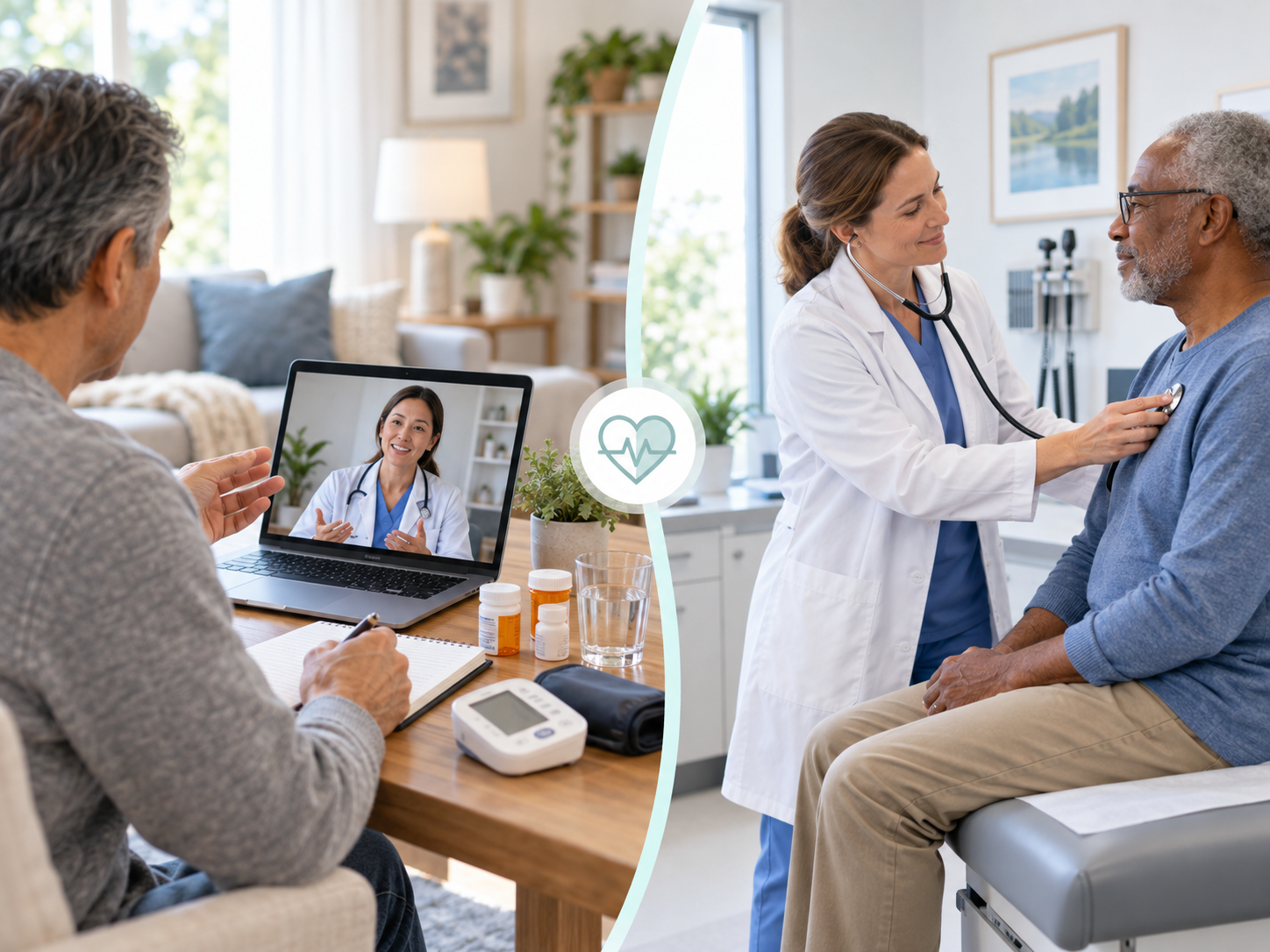
How We Use Online and In-Person Care Together
Our MedStation medical care is built around both online and in-person access. If an in-person visit is appropriate, you can review our current MedStation locations in Florida, including Pompano Beach, Boca Raton, Coconut Creek, North Miami Beach, Orlando, Weston, and Atlantic Premium.
Start with the most appropriate access point
If your concern appears suitable for a conversation-based visit, teleconsultation may be a practical first step. If you already know you need testing, an examination, or a procedure, scheduling in person can avoid an unnecessary extra step.
Follow-up can change formats
A care pathway can move in both directions. You may begin in person and complete a later follow-up online, or begin online and move in person when additional examination or testing is needed.
When You Should Not Wait for a Routine Telemedicine Visit
Telemedicine is not a substitute for emergency care. If you believe you are experiencing a medical emergency or severe, rapidly worsening symptoms, use emergency services rather than waiting for a routine appointment. The right level of care depends on the urgency and type of problem.
What telemedicine does well
A virtual visit can provide more than convenience. It gives us time to hear a detailed history, review medication lists and prior results, observe visible symptoms when appropriate, and decide what information is still missing. For ongoing care, that can make telemedicine a useful bridge between physical visits.
What telemedicine cannot physically provide
A phone or video connection cannot draw blood, obtain imaging, administer an injection, or perform every part of a hands-on examination. If the decision depends on one of those steps, moving to a clinic gives us information that the remote visit cannot supply.
For that reason, we do not define good care as “online” or “in person.” We define it by whether the chosen format gives us enough information to make the next medical decision responsibly.
Choose the Visit Format That Supports the Medical Need
If you are unsure where to begin, review our Portuguese-language MedStation care options. If you already need a physical visit, use our MedStation locations page to find an in-person option.
Frequently Asked Questions
Can telemedicine replace every office visit?
No. Telemedicine can support many discussions and follow-ups, but physical exams, testing, imaging, injections, and procedures may require in-person care.
Can I review lab results by telemedicine?
Often, result review can be handled remotely when a new physical examination is not needed. The provider may still recommend an in-person follow-up depending on the findings.
Can a prescription be issued through telemedicine?
A prescription may be provided when clinically indicated and appropriate for the visit. The decision depends on the evaluation and the type of medication or condition.
What should I prepare for a telemedicine visit?
Prepare your medication list, relevant medical history, symptoms and questions, pharmacy information, and useful home measurements when applicable.